
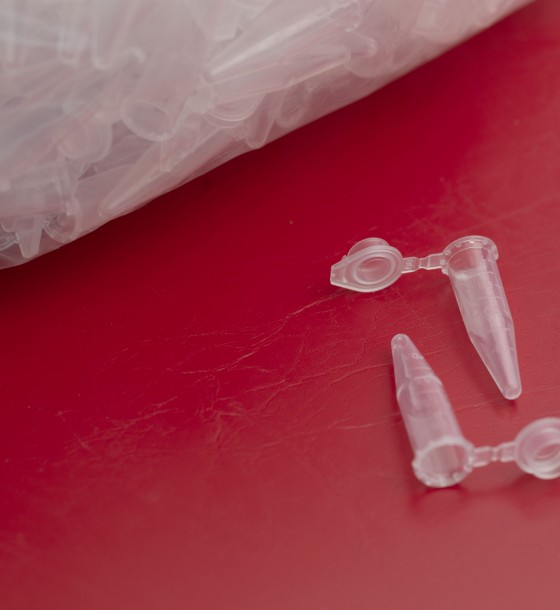
Microcentrifuge tubes
74.75
In Stock
Microcentrifuge tubes are small, cylindrical tubes commonly used in laboratory settings, particularly in biological and chemical experiments. These tubes are designed to hold small volumes of liquid, typically ranging from 0.5 mL to 2 mL, and are primarily used in centrifugation processes.
Key Features of Microcentrifuge Tubes:
Uses:
- Centrifugation: Microcentrifuge tubes are mainly used in centrifuges to separate components of liquid samples based on their density. They are ideal for small-scale applications, such as isolating DNA, RNA, proteins, or cells.
- Sample Storage: They can be used to store small volumes of biological samples, reagents, or solutions.
- Mixing and Handling: Due to their small size, these tubes are used for mixing, aliquoting, and preparing solutions in labs.
Advantages:
- Small Volume: They are ideal for working with small amounts of sample, reducing the amount of material required.
- Strong and Durable: The materials used are resistant to breakage and can withstand high-speed centrifugation without deforming.
- Convenient and Secure: The snap or screw caps provide a secure seal, preventing contamination or leakage of the sample during handling.
Disadvantages:
- Limited Volume: The capacity of these tubes is limited to small sample sizes, which may not be suitable for large-scale experiments.
- Potential for Loss: Very small samples may be difficult to retrieve, and there may be some loss when handling or transferring contents.
Microcentrifuge tubes are small, cylindrical tubes commonly used in laboratory settings, particularly in biological and chemical experiments. These tubes are designed to hold small volumes of liquid, typically ranging from 0.5 mL to 2 mL, and are primarily used in centrifugation processes.
Key Features of Microcentrifuge Tubes:
Uses:
- Centrifugation: Microcentrifuge tubes are mainly used in centrifuges to separate components of liquid samples based on their density. They are ideal for small-scale applications, such as isolating DNA, RNA, proteins, or cells.
- Sample Storage: They can be used to store small volumes of biological samples, reagents, or solutions.
- Mixing and Handling: Due to their small size, these tubes are used for mixing, aliquoting, and preparing solutions in labs.
Advantages:
- Small Volume: They are ideal for working with small amounts of sample, reducing the amount of material required.
- Strong and Durable: The materials used are resistant to breakage and can withstand high-speed centrifugation without deforming.
- Convenient and Secure: The snap or screw caps provide a secure seal, preventing contamination or leakage of the sample during handling.
Disadvantages:
- Limited Volume: The capacity of these tubes is limited to small sample sizes, which may not be suitable for large-scale experiments.
- Potential for Loss: Very small samples may be difficult to retrieve, and there may be some loss when handling or transferring contents.
0 Reviews for Microcentrifuge tubes







.jpg)