lead acetate trihydrate
234.00
In Stock
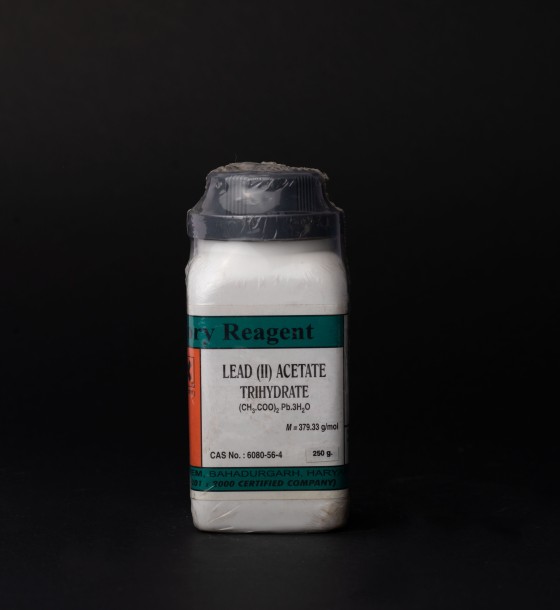
Lead acetate trihydrate (chemical formula: Pb(C₂H₃O₂)₂·3H₂O) is a chemical compound that consists of lead acetate combined with three molecules of water. It is commonly used in laboratory settings for various applications, particularly in the preparation of lead-containing compounds and in organic synthesis.
Key Features of Lead Acetate Trihydrate:
✅ Chemical Composition: It consists of lead acetate (Pb(C₂H₃O₂)₂) combined with three water molecules (trihydrate).
✅ Appearance: It typically appears as colorless or white crystalline solid that is highly soluble in water.
✅ Molecular Weight: The molecular weight of lead acetate trihydrate is approximately 379.27 g/mol.
✅ Solubility: It is highly soluble in water, making it easy to use in aqueous solutions for various reactions and applications.
✅ Toxicity: Lead acetate trihydrate is toxic and should be handled with great care. Lead compounds are hazardous to health, and exposure can lead to lead poisoning, which can affect various organs, especially the nervous system.
Common Uses:
- Chemical Reactions: Lead acetate trihydrate is often used as a reagent in organic and inorganic chemistry, especially in the synthesis of other lead compounds.
- Testing and Analytical Chemistry: It is used in testing for the presence of sulfur-containing compounds, as it forms a characteristic lead sulfide (PbS) when exposed to hydrogen sulfide (H₂S).
- Lead-based Products: It has been used in the preparation of lead-based paints and dyes (though its use in paints has been significantly reduced due to toxicity concerns).
- Photography: In the past, it was used in photographic processes as a fixing agent.
Safety Considerations:
⚠️ Toxicity: Lead acetate trihydrate is toxic if inhaled, ingested, or absorbed through the skin. It is a known carcinogen and can lead to severe health issues such as lead poisoning. Always wear appropriate personal protective equipment (PPE) like gloves, lab coats, and safety goggles.
⚠️ Proper Handling: Use it in well-ventilated areas, preferably in a fume hood, to minimize exposure to toxic fumes.
⚠️ Disposal: Lead acetate trihydrate must be disposed of according to local environmental regulations due to its toxicity. Avoid releasing it into the environment.
Storage:
- Storage Conditions: Store lead acetate trihydrate in a cool, dry place, away from incompatible materials such as acids, reducing agents, and bases.
- Packaging: It should be stored in tightly sealed containers to prevent moisture absorption and contamination.
Key Safety and Handling Tips:
- Always follow the appropriate safety guidelines and protocols when working with lead acetate trihydrate.
- Regularly check for any exposure risks and ensure proper ventilation when working with it.
Lead acetate trihydrate (chemical formula: Pb(C₂H₃O₂)₂·3H₂O) is a chemical compound that consists of lead acetate combined with three molecules of water. It is commonly used in laboratory settings for various applications, particularly in the preparation of lead-containing compounds and in organic synthesis.
Key Features of Lead Acetate Trihydrate:
✅ Chemical Composition: It consists of lead acetate (Pb(C₂H₃O₂)₂) combined with three water molecules (trihydrate).
✅ Appearance: It typically appears as colorless or white crystalline solid that is highly soluble in water.
✅ Molecular Weight: The molecular weight of lead acetate trihydrate is approximately 379.27 g/mol.
✅ Solubility: It is highly soluble in water, making it easy to use in aqueous solutions for various reactions and applications.
✅ Toxicity: Lead acetate trihydrate is toxic and should be handled with great care. Lead compounds are hazardous to health, and exposure can lead to lead poisoning, which can affect various organs, especially the nervous system.
Common Uses:
- Chemical Reactions: Lead acetate trihydrate is often used as a reagent in organic and inorganic chemistry, especially in the synthesis of other lead compounds.
- Testing and Analytical Chemistry: It is used in testing for the presence of sulfur-containing compounds, as it forms a characteristic lead sulfide (PbS) when exposed to hydrogen sulfide (H₂S).
- Lead-based Products: It has been used in the preparation of lead-based paints and dyes (though its use in paints has been significantly reduced due to toxicity concerns).
- Photography: In the past, it was used in photographic processes as a fixing agent.
Safety Considerations:
⚠️ Toxicity: Lead acetate trihydrate is toxic if inhaled, ingested, or absorbed through the skin. It is a known carcinogen and can lead to severe health issues such as lead poisoning. Always wear appropriate personal protective equipment (PPE) like gloves, lab coats, and safety goggles.
⚠️ Proper Handling: Use it in well-ventilated areas, preferably in a fume hood, to minimize exposure to toxic fumes.
⚠️ Disposal: Lead acetate trihydrate must be disposed of according to local environmental regulations due to its toxicity. Avoid releasing it into the environment.
Storage:
- Storage Conditions: Store lead acetate trihydrate in a cool, dry place, away from incompatible materials such as acids, reducing agents, and bases.
- Packaging: It should be stored in tightly sealed containers to prevent moisture absorption and contamination.
Key Safety and Handling Tips:
- Always follow the appropriate safety guidelines and protocols when working with lead acetate trihydrate.
- Regularly check for any exposure risks and ensure proper ventilation when working with it.
0 Reviews for lead acetate trihydrate
Related Products
234.00


95.75

16.10

86.25

0.00
Customers Also Bought

182.00


126.50

150.00


200.00
92.57