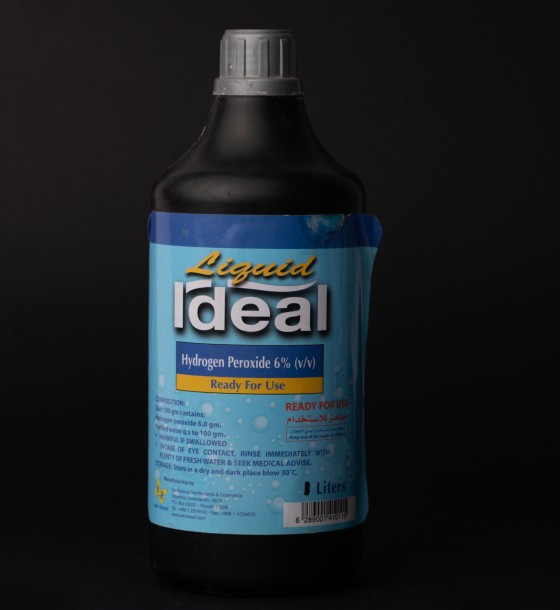
hydorgen peroxide
103.50
In Stock
Hydrogen Peroxide (H₂O₂) is a versatile chemical compound that has a wide range of applications, both in the laboratory and in everyday life. Here's an overview of it:
Properties of Hydrogen Peroxide:
- Chemical Formula: H₂O₂
- Appearance: A colorless, odorless liquid in its pure form.
- Concentration: It is typically available in concentrations of 3%, 6%, 30%, or higher. The most common concentration used for household purposes is 3%.
- Reactivity: Hydrogen peroxide is a strong oxidizer and decomposes rapidly into water (H₂O) and oxygen (O₂), especially in the presence of light, heat, or certain catalysts (like manganese dioxide).
Uses of Hydrogen Peroxide:
In Laboratories:
- Disinfecting and Sterilizing: Hydrogen peroxide is used as a disinfectant for surfaces and equipment due to its antimicrobial properties. It is also used for cleaning laboratory glassware.
- Oxidizing Agent: In chemical reactions, hydrogen peroxide is used as a strong oxidizing agent to break down other substances or to facilitate reactions.
- Decomposition Reactions: It is commonly used to demonstrate or study decomposition reactions in labs. Under controlled conditions, hydrogen peroxide decomposes into water and oxygen, which can be catalyzed using substances like potassium iodide.
In Healthcare:
- Wound Cleaning: Hydrogen peroxide is often used to clean minor cuts and abrasions due to its antiseptic properties. It kills bacteria and helps prevent infection (though it’s sometimes recommended not to use it on deep wounds as it may damage healthy tissue).
- Mouth Rinse: In diluted form, hydrogen peroxide is sometimes used as a mouth rinse to help whiten teeth and reduce mouth bacteria.
In Household:
- Disinfectant: Hydrogen peroxide is often used as a natural disinfectant for cleaning and sanitizing various surfaces in the home, including countertops and bathroom areas.
- Whitening Agent: It’s used in laundry for whitening clothes and removing stains.
- Vegetable and Fruit Cleaner: It can be used to wash fruits and vegetables to remove pesticides and bacteria.
In Beauty and Personal Care:
- Hair Bleaching: Hydrogen peroxide is commonly used as a hair bleach in salon treatments and home hair-lightening kits.
- Skin Lightening: It has mild bleaching properties and can sometimes be used in skincare products.
Decomposition of Hydrogen Peroxide:
Hydrogen peroxide breaks down into water and oxygen, and this reaction is accelerated by light, heat, or catalysts. Here's the simplified equation for its decomposition:
2H2O2→2H2O+O22 H_2O_2 \rightarrow 2 H_2O + O_22H2O2→2H2O+O2This is why hydrogen peroxide is typically stored in dark bottles to prevent it from decomposing prematurely.
Safety and Handling:
- Concentration Matters: The higher the concentration (above 10%), the more dangerous hydrogen peroxide can be. Concentrated hydrogen peroxide can cause severe burns, irritation to the skin, and damage to eyes.
- Handling Precautions: Always wear gloves and goggles when handling concentrated hydrogen peroxide, and use it in a well-ventilated area to avoid inhaling fumes.
- Storage: Store hydrogen peroxide in a cool, dark place to slow its decomposition.
Applications in Chemistry:
- As a Redox Agent: It is frequently used in redox reactions, where it can donate or accept electrons, especially in organic chemistry.
- Polymerization Reactions: It is used to initiate polymerization reactions in the production of plastics and synthetic rubber.
Dilution and Concentration:
- 3% Solution: Safe for most household and healthcare uses like cleaning and wound care.
- 6-10% Solution: Often used for stronger disinfecting or as a bleaching agent for hair.
- 30% Solution and Higher: Used in industrial applications, but requires extreme care due to its strong oxidizing nature.
Hydrogen Peroxide (H₂O₂) is a versatile chemical compound that has a wide range of applications, both in the laboratory and in everyday life. Here's an overview of it:
Properties of Hydrogen Peroxide:
- Chemical Formula: H₂O₂
- Appearance: A colorless, odorless liquid in its pure form.
- Concentration: It is typically available in concentrations of 3%, 6%, 30%, or higher. The most common concentration used for household purposes is 3%.
- Reactivity: Hydrogen peroxide is a strong oxidizer and decomposes rapidly into water (H₂O) and oxygen (O₂), especially in the presence of light, heat, or certain catalysts (like manganese dioxide).
Uses of Hydrogen Peroxide:
In Laboratories:
- Disinfecting and Sterilizing: Hydrogen peroxide is used as a disinfectant for surfaces and equipment due to its antimicrobial properties. It is also used for cleaning laboratory glassware.
- Oxidizing Agent: In chemical reactions, hydrogen peroxide is used as a strong oxidizing agent to break down other substances or to facilitate reactions.
- Decomposition Reactions: It is commonly used to demonstrate or study decomposition reactions in labs. Under controlled conditions, hydrogen peroxide decomposes into water and oxygen, which can be catalyzed using substances like potassium iodide.
In Healthcare:
- Wound Cleaning: Hydrogen peroxide is often used to clean minor cuts and abrasions due to its antiseptic properties. It kills bacteria and helps prevent infection (though it’s sometimes recommended not to use it on deep wounds as it may damage healthy tissue).
- Mouth Rinse: In diluted form, hydrogen peroxide is sometimes used as a mouth rinse to help whiten teeth and reduce mouth bacteria.
In Household:
- Disinfectant: Hydrogen peroxide is often used as a natural disinfectant for cleaning and sanitizing various surfaces in the home, including countertops and bathroom areas.
- Whitening Agent: It’s used in laundry for whitening clothes and removing stains.
- Vegetable and Fruit Cleaner: It can be used to wash fruits and vegetables to remove pesticides and bacteria.
In Beauty and Personal Care:
- Hair Bleaching: Hydrogen peroxide is commonly used as a hair bleach in salon treatments and home hair-lightening kits.
- Skin Lightening: It has mild bleaching properties and can sometimes be used in skincare products.
Decomposition of Hydrogen Peroxide:
Hydrogen peroxide breaks down into water and oxygen, and this reaction is accelerated by light, heat, or catalysts. Here's the simplified equation for its decomposition:
2H2O2→2H2O+O22 H_2O_2 \rightarrow 2 H_2O + O_22H2O2→2H2O+O2This is why hydrogen peroxide is typically stored in dark bottles to prevent it from decomposing prematurely.
Safety and Handling:
- Concentration Matters: The higher the concentration (above 10%), the more dangerous hydrogen peroxide can be. Concentrated hydrogen peroxide can cause severe burns, irritation to the skin, and damage to eyes.
- Handling Precautions: Always wear gloves and goggles when handling concentrated hydrogen peroxide, and use it in a well-ventilated area to avoid inhaling fumes.
- Storage: Store hydrogen peroxide in a cool, dark place to slow its decomposition.
Applications in Chemistry:
- As a Redox Agent: It is frequently used in redox reactions, where it can donate or accept electrons, especially in organic chemistry.
- Polymerization Reactions: It is used to initiate polymerization reactions in the production of plastics and synthetic rubber.
Dilution and Concentration:
- 3% Solution: Safe for most household and healthcare uses like cleaning and wound care.
- 6-10% Solution: Often used for stronger disinfecting or as a bleaching agent for hair.
- 30% Solution and Higher: Used in industrial applications, but requires extreme care due to its strong oxidizing nature.
0 Reviews for hydorgen peroxide
Related Products
103.50

34.50


35.10
138.00


8.50