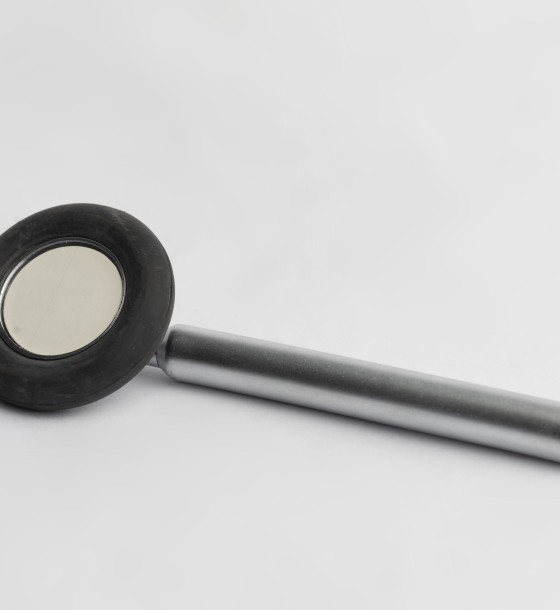
Babinski hammer
51.75
In Stock
The Babinski hammer is a medical tool used in neurological examinations to assess reflexes, particularly the plantar reflex associated with the Babinski sign. It's an essential instrument for evaluating the health of the central nervous system.
Uses of the Babinski Hammer ????
Assessing the Central Nervous System (CNS):
- Helps detect abnormalities in nerve pathways between the brain and spinal cord.
Testing the Babinski Sign:
- Stroking the sole of the foot with the hammer's pointed end can help identify neurological disorders. An upward movement of the big toe indicates an abnormal response.
Reflex Testing:
- Used to check deep tendon reflexes, such as those in the knees or ankles, to assess nerve and muscle function.
Design of the Babinski Hammer
- Metal or Rubber Head:
- Used for tapping tendons gently.
- Long Handle:
- Provides better control and leverage during testing.
- Pointed Tip:
- Ideal for sensory tests, such as stroking the sole of the foot.
How to Perform the Babinski Test
- The patient lies down with feet relaxed.
- Use the pointed end of the hammer to lightly stroke from the heel to the base of the toes.
- Normal: Toes curl downward.
- Abnormal: The big toe moves upward, and other toes fan out, indicating potential CNS issues.
When Is It Used?
- To assess infants (Babinski sign is normal in newborns).
- To evaluate CNS damage in conditions such as:
- Stroke.
- Multiple Sclerosis (MS).
- Brain or spinal cord injuries.
The Babinski hammer is a vital diagnostic tool for neurologists. It requires expertise to perform and interpret results accurately.
???? Let me know if you'd like more information on its usage or the conditions it can help diagnose! ????
The Babinski hammer is a medical tool used in neurological examinations to assess reflexes, particularly the plantar reflex associated with the Babinski sign. It's an essential instrument for evaluating the health of the central nervous system.
Uses of the Babinski Hammer ????
Assessing the Central Nervous System (CNS):
- Helps detect abnormalities in nerve pathways between the brain and spinal cord.
Testing the Babinski Sign:
- Stroking the sole of the foot with the hammer's pointed end can help identify neurological disorders. An upward movement of the big toe indicates an abnormal response.
Reflex Testing:
- Used to check deep tendon reflexes, such as those in the knees or ankles, to assess nerve and muscle function.
Design of the Babinski Hammer
- Metal or Rubber Head:
- Used for tapping tendons gently.
- Long Handle:
- Provides better control and leverage during testing.
- Pointed Tip:
- Ideal for sensory tests, such as stroking the sole of the foot.
How to Perform the Babinski Test
- The patient lies down with feet relaxed.
- Use the pointed end of the hammer to lightly stroke from the heel to the base of the toes.
- Normal: Toes curl downward.
- Abnormal: The big toe moves upward, and other toes fan out, indicating potential CNS issues.
When Is It Used?
- To assess infants (Babinski sign is normal in newborns).
- To evaluate CNS damage in conditions such as:
- Stroke.
- Multiple Sclerosis (MS).
- Brain or spinal cord injuries.
The Babinski hammer is a vital diagnostic tool for neurologists. It requires expertise to perform and interpret results accurately.
???? Let me know if you'd like more information on its usage or the conditions it can help diagnose! ????
0 Reviews for Babinski hammer
Related Products
51.75

240.00

35.10
1,150.00



156.00

156.00